


An island of green inspiration
The road to reducing the European CO2 emissions is a winding one, however one small Danish island is leading the way forward – Samsø is self-sufficient with renewable energy and is a green inspiration and project partner all over the world, writes Agnete Vestergaard-Kristensen. (Jan 2013)
High speed, low benefits
The new high speed train connecting Madrid and Valencia, built with extraordinary focus on the environment, was expected to transform transportation patterns and revive languishing regions. And, for instance, put the world heritage city of Cuenca on the map again. But two years after its opening, the benefits are fewer than expected, reports Alejandro Izquierdo. (Jan 2013)
Gold rush in Greece
 As a Canadian company attempts to establish its mining enterprise in Northern Greece it encounters opposition from anti-mining groups who say the mines will destroy their region. Reporters Kathryn Stewart and Kristian Secher filed this multimedia report from the mines. (Jun 2012)
Food wasted – because consumers save
The growing waste of food can partly be blamed on supermarkets, not just the consumers:
The quality requirements call for fruits and vegetables to be of certain size and weight. Amy Mowle takes us through some of the reasons behind waste of edible food, and possible solutions. (Dec 2012)
Hazardous waste threatens Croatia’s northern coastal region
 In the Kvarner region of northern Croatia a colossal illegal landfill for hazardous waste is leaking its toxic liquids, letting them soak into the underground, possibly making it go to the sea – dangerous also to people. (Jun 2012)
.
.
.
.
Beaches under threat as tourism increases

With over 12 million tourists expected to visit the beautiful and sunny Balearic Islands this summer, the picture perfect beaches of Mallorca are at risk of being severely eroded as its ecosystem struggles to thrive under constant pollution. Alison Brown takes us on a tour to the fragile ecosystems surrounding these beaches. (Jun 2012)
.
.
Fur farming – friend or foe?
 The fur farming industry has been surrounded in controversy for decades.
What is propaganda and what is reality?
Take a mink farming tour with Geji student Carla Johnson and learn about fur production, animal welfare and environment. You may have to update your prejudices.
.
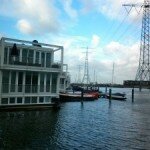 Living on the water.
The Netherlands has always been vulnerable to flooding.
And while climate change causes the sea level to rise, the floating dutchmen are trying to adapt by letting their houses float.
Get aboard with Geji student Kate Elphinstone.
.
Watching or hunting?
 As tourism in Iceland continues to increase, the potential for conflict between the whale watching and the whale hunting industries becomes more apparent.
Follow Geji student Stephanie Bishop-Hall from Tasmania to Iceland’s whale business.
.
.
 Northern Lives – melting away?
If the Arctic is considered the world’s barometer for measuring climate change, then the Sami are at its mercury.
For centuries the Sami have lived a nomadic life, prospering from herding reindeer across the Arctic wilderness.
But recent development and a rapidly changing climate have broken the equilibrium – it is at risk of melting away.
Take a reindeer tour with Geji student Joel Tozer.
.
 Your life has a CO2-footprint – but what about your death?
Your death is your last CO2 footprint – but how big? Watch “Dying Eco-Friendly” here.
The story is among a series of news of current affairs stories, produced by the International TV Class at the Danish School of Media and Journalism – related to the GEJI program.
You can also watch stories about an island going really CO2 neutral.
About eco-tourism in Norway. There are news about traffic and noise pollution.
And about eating bugs to replace red meat. See the entire list here.
Kangaroos, mice – and blind crawfish
We have collected a handfull of very different environment stories, written by GEJI students in Monash University, Melbourne.
Read them all here.
GEJI student wins top Journalism award – reporting from the “ground zero” of climate change
Lauren Day (who now works for regional ABC in Queensland, Australia) has won the Student Walkley, a top award for Journalism students – for her video produced for her Honours journalism degree at UTS, Sydney. Her choice of topic was very definitely a result of her GEJI experiences through which she became a committed environmental journalist. See Lauren Day’s story on climate change in Kirabati.
Media and politics: Cancun? Zero, nothing there
Hopenhagen, Flopenhagen. And Cancun. We took another media snapshot shortly after the almost secret Cop16 conference in Cancun. Read the reports about the attitudes from media and NGOs to the media coverage of the latest UN Climate Change conferences.
Media and politics: Ambitions changed after Cop15
We took a look 9-10 months after Copenhagen – and what did we find? Not much. Politicians and the media seemed to lower their ambitions significantly after Copenhagen. Read the reports students wrote about how Cop15 changed the attitude of newsrooms and stakeholders leading up to the next UN climate change conference.
Deepwater Horizons not so bright
On 20 April a disastrous explosion on the BP-owned Deepwater Horizon rig killed 11 workers and subsequently caused the rig to sink. A damaged wellhead underwater was left leaking over 1 million litres of oil per day for a month. Was it preventable – and will it happen again? Bjorn-Ruban Thomassen, London City student at UTS Sydney, reports.
Sydney suburbs left in bicycle dust
Improvements in Sydney transport infrastructure mean more people are choosing to travel by bicycle. But most of these trips are made in the small inner city; the vast suburbs of Sydney are being left behind, reports Julie Kofoed, a Danish student at UTS Sydney.
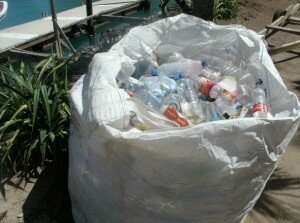 Greening up a tropical paradise
The island of Malolo Lailai is leading the green movement in Fiji with new recycling initiatives. Read the report by Bella Papadopoulou Dobrowolska, a GEJI student from Greece at UTS Sydney.
.
.
Bottled water – an international overview 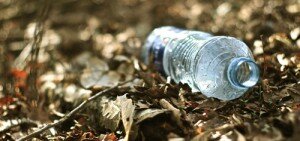
In an international effort, journalism students in different countries covered the bottled water industry – and shared the research, the methods and their learning among them. Most notably this work was done out of Sydney, Australia. Check out one of the outputs – the impressing wiki-based overview of the Australian bottled water industry and market
Renewable Energy – the European Way.
 Have a drink and a smile in Scotland where whisky production turns green. Learn about Sahare solar panels in Germany – and solar panels already cover many roofs in Spanish cities. Brits want renewable energy but no wind turbines.
20 journalists covers alternative and renewable energy stratey in Europe.
Read Euroviews 2010 here.
SAMSØ – an island going CO2-neutral!
The Danish Island of Samsoe has become CO2 neutral in less than 10 years. The local people bought shares in the local wind turbines; today, a variety of alternative energy sources provide the islanders with heating, electricity, and even fuel for cars.
31 journalism students from around the World visited the green island and created this multimedia web site!
How foreigners look at…
Biogas from pigs, bicycle riding, organic food – all parts of Denmark’s image and reality. Watch tv pieces created by international TV students.
Copenhagen COP15 Climate Summit:
GEJI students reported from Copenhagen – see the stories here, written by a group of international students at the Danish School of Journalism.
Supermarkets expand cheap organics sales
Supermarket chain Rema 1000 is aggressively pushing cheap organic products in Denmark. Organic farmers are sceptical of this development. Norwegian journalist Hanne Marie Molde reports from Denmark.
Go visit Sillamae – the town was a secret for 40 years
During the Soviet regime, factories in Sillamae refined uranium for power plants and weapon, and was inaccessible. Two GEJI students – Lauren Day and Johanna Lindfors – report from Estonia.
Raised up on a sea of change
Norway’s Sami reindeer herders face an uncertain future, with the prospect of a changing climate and increasing development due to oil resources in the Arctic. See GEJI journalists Lauren Day and Sophie Tarr’s report.
Dark clouds on a clear day
Fears about the environment have been linked to a growing number of mental health issues in young people, writes UTS student Mary Fallon in the Sydney Morning Herald. Also read her story on kids’ fear for future bushfires.
Wind and food – that’s Denmark
Windmills and organic food. That, along with bicycles, is what Denmark is known for, when it’s about the environment. See 2+2 tv-productions from international TV students in Århus Denmark.
Heavy GEJI presence at climate conference
The GEJI universities and journalism schools has a significant presence at the Global Dialogue conference, going on in Århus Denmark from 3.-6. of November 2009. Masters students of journalism blog from the event.
Read more - and join the discussion about journalists as reporters or missionaires.
GEJI students to cover COP15 in Copenhagen.
This website – GEJIweb.org – will turn into a news site during the COP15, covering the activities in Copenhagen in December. Stay tuned – and read more.


 350 – and not higher; read reports from the Day of Climate Action
Saturday October 24th marked the “350_ day globally; a day of climate action, activities and events.
Read the GEJI reporters’ reports from the UK, Australia and Hong Kong – and updates from around the world!
A GEJI survey: Plasticbags are still all over
A GEJI international survey of thousands of shoppers showed that supermarket chains in many countries have failed to stem plastic bag consumption.
Journalism students from universities in Europe, Asia and Australia collaborated in producing a major report about plastic bag use, observing more than 6500 supermarkets shoppers. Check the surprising results here.
The CO2 trading – flawy but necessary The EU Emission Trading Scheme (ETS) has many flaws, but the arguments against it have at least as many. Jesper Rolin investigates the Europeans’ CO2 trading.
Dairy troubles, climate struggles call for innovation The economic crisis hits the agricultural industry hard this time around. At the same time, the production of meat and milk is a significant contributor to the emission of greenhouse gases. Maybe the time is nigh for an industry makeover? Anne Shifley reports from Germany.
Garden eaters or global threat? The infamous killer slug poses not only a threat to your garden plant; they are much more than that. Check Thorsten Weitling on the slimy killer slug threat.
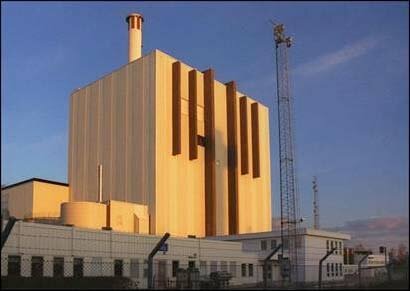
Sweden goes nuclear – again Chernobyl proved that there is no room for mistakes when it comes to nuclear power. Nevertheless, Sweden is back on the nuclear bandwagon. Gemma Black explains how and why.

Scientists tell PM and coal industry: Act on Climate Change; stop using coal Australia’s top climate scientists have written to the Prime Minister and coal industry CEOs, urging them to take responsibility for their role in climate change and to shut down coal-fired power stations – the major source of greenhouse gas emissions in Australia. UTS journalist Elaine McKewon reports – Read more…
NGOs Hold Breath While Denmark Decides on Australian Toxic Waste Germany said no, so now the Australian Government is trying to convince Denmark to take care of one of the world’s biggest amounts of HCB – an extremely dangerous toxic waste. – Read more…
March 23: GEJI project officially launched in Sydney – read the report from the event at UTS, the lead Australian partner.
Beyond Kyoto conference on climate change – 5.-7. March 2009
Read our online coverage of the Climate Change scientific conference in Århus, Denmark. It was covered by international journalism students from the Danish School of Media and Journalism. More than 100 news items were posted during two days.
Once again, the rich spoke about the absent poor
The Århus message: Send more money
Forests are the best carbon absorbers
India weathers even harder times
. . . . . . . . . . . . . . . . . . . . . . . . . . . . .

Read older stories:
Biofuel has limited effect in Danish cars
The cars driving around on the danish roads are only able to use very little amounts of biofuel. The cars that can really benefit from biofuel do exist, but they are very hard to find in Denmark.
“See the world outside of yourself” 
Denmark, pioneer of agricultural development.
Copenhagen is a ticking bomb
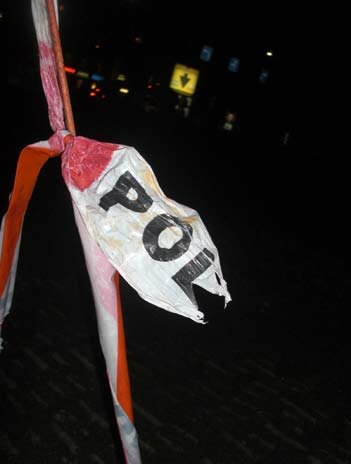 Demonstrations might turn into violent scenes, when thousands of activists meet in Copenhagen in December during the Climate summit.
.

 UN Climate Change News:
Latest comments: